
1 / 6
Nuclear History 002
Shot Dog, 1951
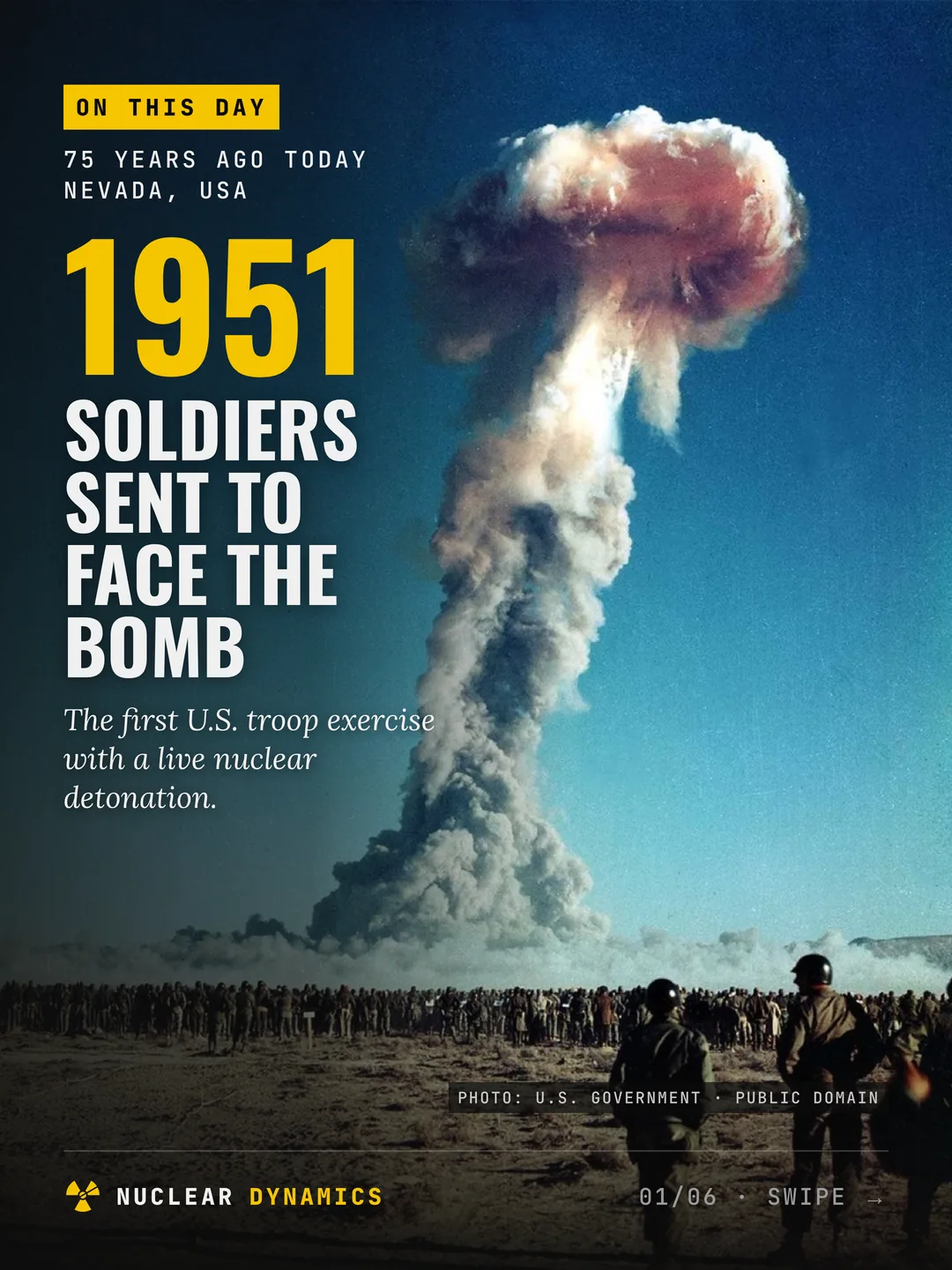
75 years ago today, soldiers were sent to face the bomb. ☢️
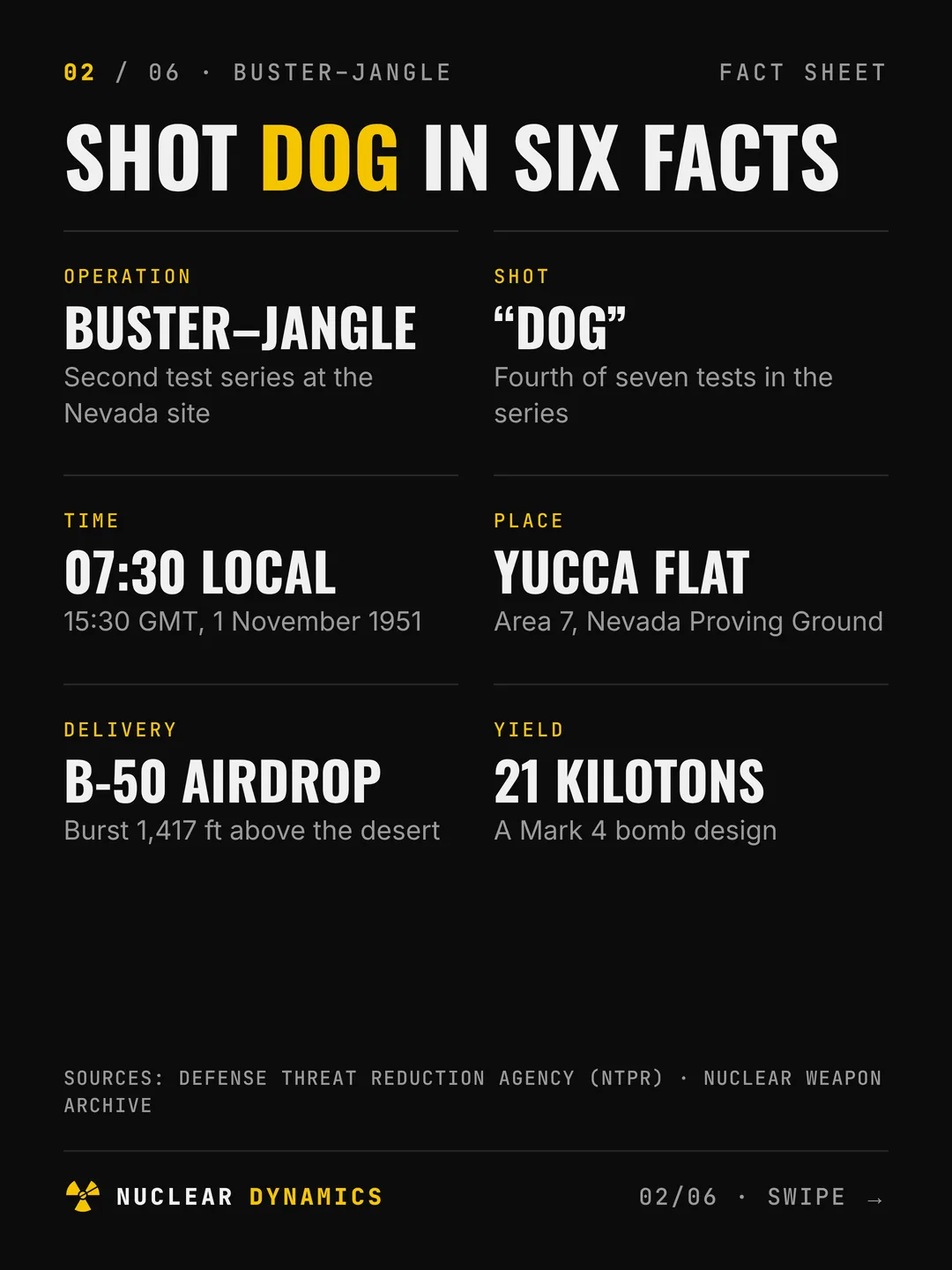
On 1 November 1951, at 07:30 local time, a B-50 bomber dropped a 21-kiloton nuclear bomb over Yucca Flat, Nevada. It was shot “Dog” of Operation Buster–Jangle.
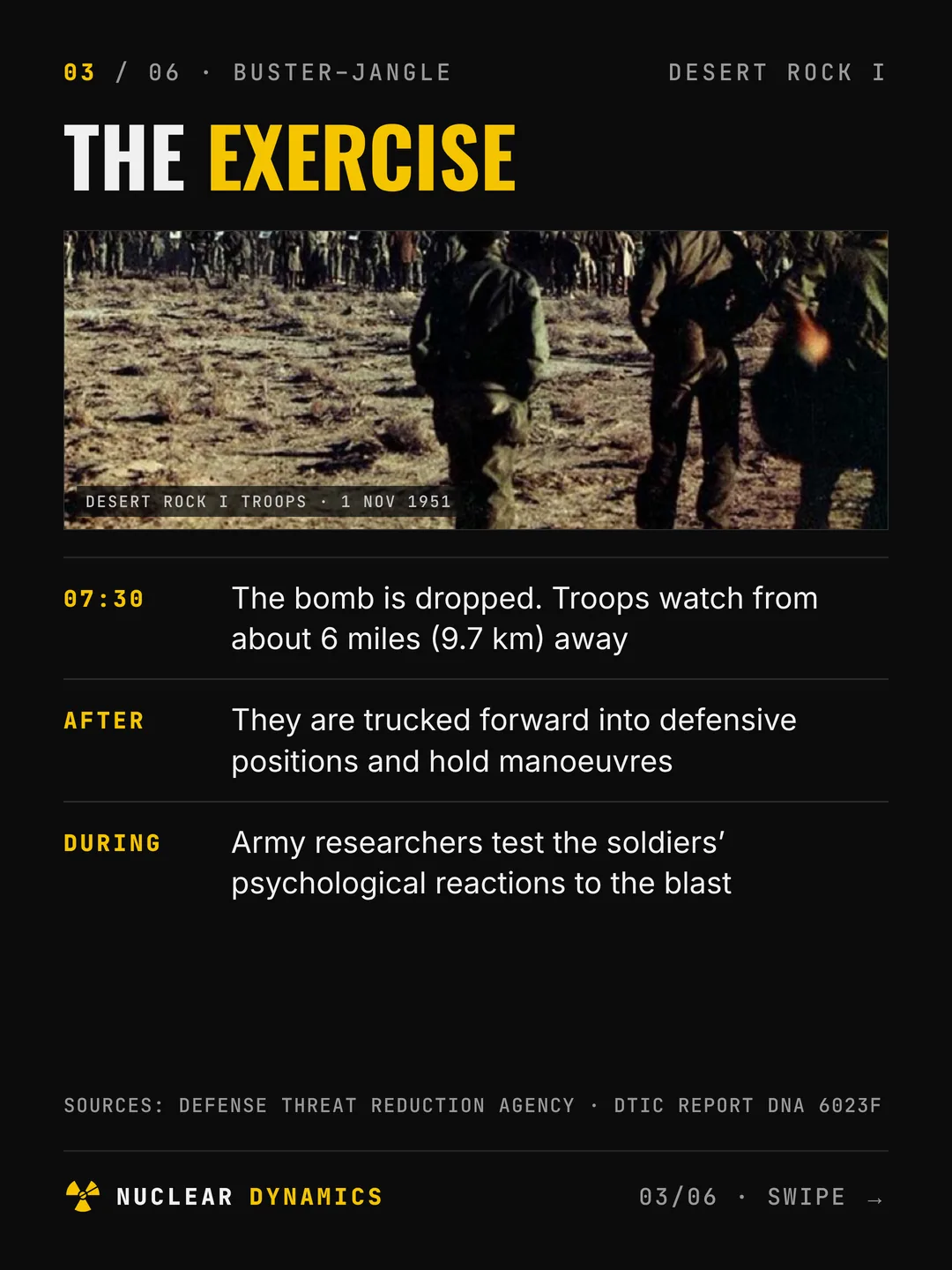
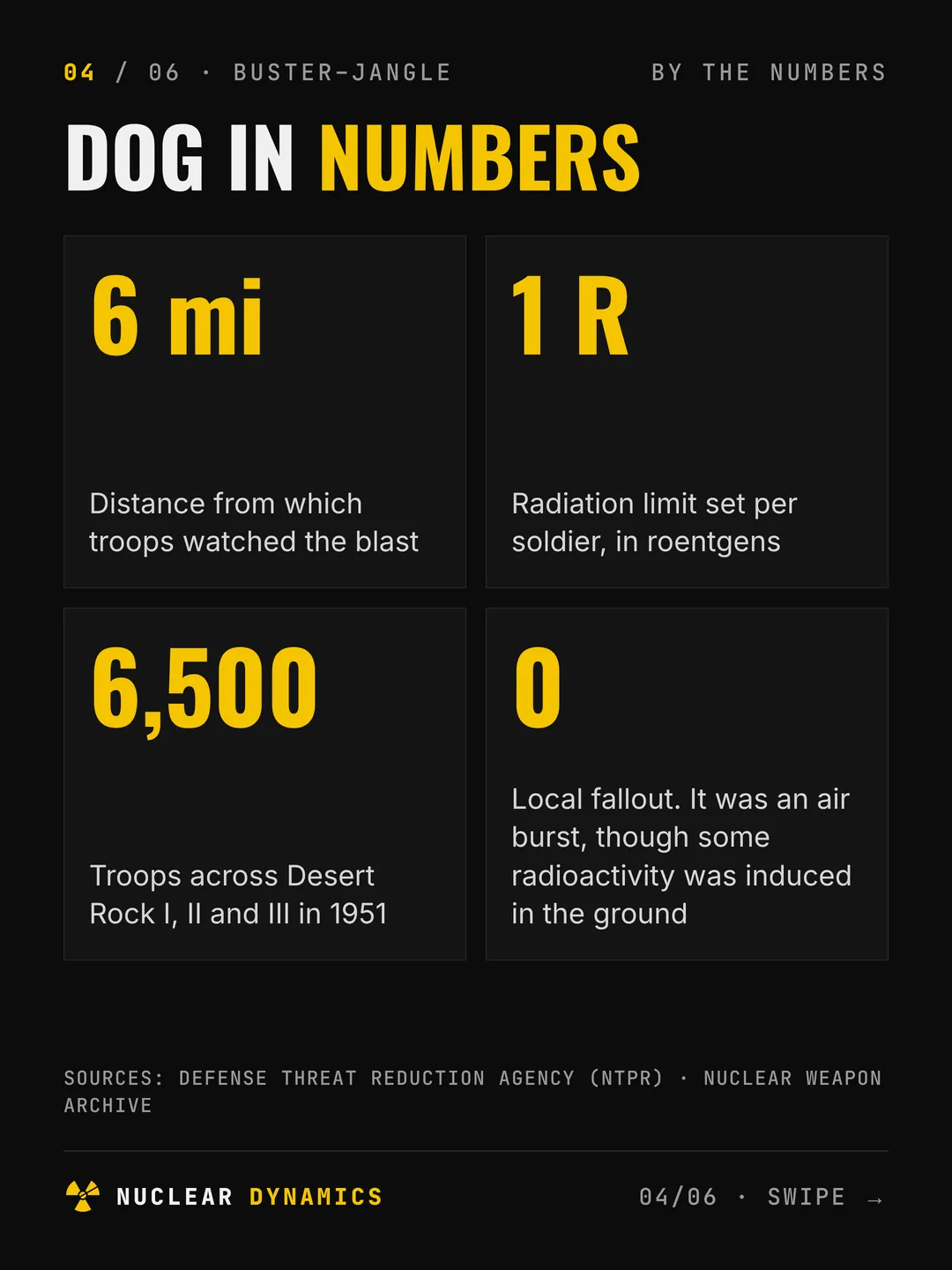
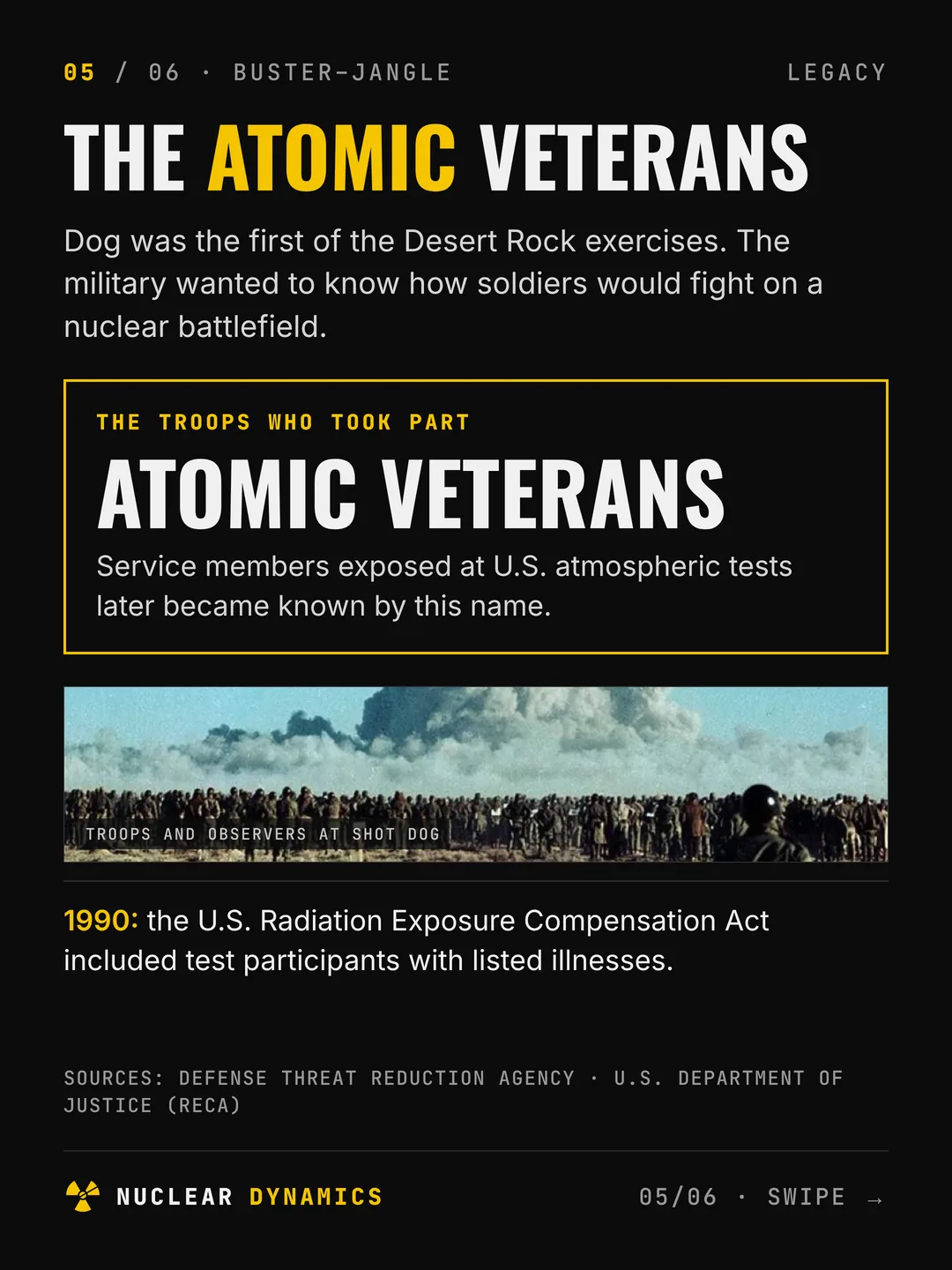
Thousands of U.S. troops watched from about 6 miles away. This was Exercise Desert Rock I, the first U.S. nuclear field exercise on land. After the blast, soldiers were trucked forward into defensive positions to hold manoeuvres, while Army researchers studied their psychological reactions.
The radiation limit for each soldier was set at 1 roentgen. About 6,500 troops took part in the three Desert Rock exercises that year.
The service members exposed at these tests became known as “atomic veterans”. In 1990, the U.S. Radiation Exposure Compensation Act included test participants with listed illnesses.
This is Nuclear History 002. Start the series with 001: Trinity, 1945.
📌 Save this post and follow @nucleardynamics for nuclear history, alerts and analysis.
Sources: Defense Threat Reduction Agency (NTPR) · DTIC report DNA 6023F · Nuclear Weapon Archive
Photo: U.S. Government, public domain
Sources
- Defense Threat Reduction Agency (NTPR)
- DTIC report DNA 6023F
- Nuclear Weapon Archive
- Photo: U.S. Government, public domain
Read the slides as text
- ON THIS DAY 75 YEARS AGO TODAY NEVADA, USA 1951 Soldiers sent to face the bomb The first U.S. troop exercise with a live nuclear detonation. PHOTO: U.S. GOVERNMENT · PUBLIC DOMAIN
- 02 / 06 · BUSTER–JANGLE FACT SHEET Shot Dog in six facts OPERATION Buster–Jangle Second test series at the Nevada site SHOT “Dog” Fourth of seven tests in the series TIME 07:30 local 15:30 GMT, 1 November 1951 PLACE Yucca Flat Area 7, Nevada Proving Ground DELIVERY B-50 airdrop Burst 1,417 ft above the desert YIELD 21 kilotons A Mark 4 bomb design SOURCES: DEFENSE THREAT REDUCTION AGENCY (NTPR) · NUCLEAR WEAPON ARCHIVE
- 03 / 06 · BUSTER–JANGLE DESERT ROCK I The exercise DESERT ROCK I TROOPS · 1 NOV 1951 07:30 The bomb is dropped. Troops watch from about 6 miles (9.7 km) away AFTER They are trucked forward into defensive positions and hold manoeuvres DURING Army researchers test the soldiers’ psychological reactions to the blast SOURCES: DEFENSE THREAT REDUCTION AGENCY · DTIC REPORT DNA 6023F
- 04 / 06 · BUSTER–JANGLE BY THE NUMBERS Dog in numbers 6 mi Distance from which troops watched the blast 1 R Radiation limit set per soldier, in roentgens 6,500 Troops across Desert Rock I, II and III in 1951 0 Local fallout. It was an air burst, though some radioactivity was induced in the ground SOURCES: DEFENSE THREAT REDUCTION AGENCY (NTPR) · NUCLEAR WEAPON ARCHIVE
- 05 / 06 · BUSTER–JANGLE LEGACY The atomic veterans Dog was the first of the Desert Rock exercises. The military wanted to know how soldiers would fight on a nuclear battlefield. THE TROOPS WHO TOOK PART Atomic veterans Service members exposed at U.S. atmospheric tests later became known by this name. TROOPS AND OBSERVERS AT SHOT DOG 1990: the U.S. Radiation Exposure Compensation Act included test participants with listed illnesses. SOURCES: DEFENSE THREAT REDUCTION AGENCY · U.S. DEPARTMENT OF JUSTICE (RECA)
- NUCLEAR HISTORY · 002 Every nuclear story, from the first Save this post. Start the series with 001: Trinity, 1945. @NUCLEARDYNAMICS HISTORY · ALERTS · ANALYSIS